International shipping rates are becoming harder for exporters to predict. Fuel costs, route disruptions, port congestion, seasonal demand, carrier surcharges, tariffs, and changing global trade patterns can all affect the final cost of moving cargo from Pakistan to international markets.
For Pakistani exporters, especially businesses shipping from Sialkot, Lahore, Karachi and other manufacturing hubs, this can create a frustrating situation: a freight quote that looks reasonable today may become more expensive when the shipment is actually booked.
The good news? Higher freight costs don’t always mean higher shipping expenses for your business. With the right planning, packaging, shipping method and freight forwarder in Pakistan, exporters can often reduce unnecessary costs while avoiding expensive delays.
In this guide, we’ll explain why international shipping rates are rising, what is driving freight costs in 2026, and practical ways exporters can reduce freight costs without compromising delivery times.
Why Are International Shipping Rates Rising?
International freight pricing is not controlled by a single factor. Shipping companies calculate rates based on a combination of fuel prices, available vessel and aircraft capacity, demand, routes, port conditions, cargo characteristics and additional fees.
For exporters, understanding these factors makes it easier to plan shipments and negotiate better logistics solutions.
1. Fuel and Energy Costs
Fuel is one of the biggest operating expenses for airlines, shipping lines and trucking companies.
When fuel prices increase, carriers may introduce or increase fuel surcharges. These charges can affect both air freight and ocean freight, although the impact varies depending on the route and carrier.
For a Pakistani exporter shipping products to the USA, UK, Germany, France, Italy, Spain or the Middle East, fuel-related costs can become part of the overall freight quotation.
That doesn’t necessarily mean every shipment will become dramatically more expensive. The actual impact depends on the carrier, route, cargo volume and current market conditions.
2. Global Route Disruptions Can Increase Freight Costs
International shipping depends on predictable transportation routes.
When geopolitical events, security concerns, weather conditions or infrastructure problems affect major shipping corridors, carriers may change routes or schedules.
A longer route can mean:
- Higher fuel consumption
- Longer transit times
- Additional vessel or aircraft operating costs
- Schedule changes
- Increased insurance or security-related expenses
- Potential delays at connecting ports
For exporters, this creates two problems at once: higher freight costs and less predictable delivery times.
That’s why choosing the cheapest shipping quote isn’t always the smartest decision.
A slightly more expensive service with a reliable transit route can sometimes save considerably more money by preventing missed production schedules, customer complaints and delayed deliveries.
3. Demand and Peak Shipping Seasons
Freight prices are also influenced by supply and demand.
When many businesses are trying to move cargo at the same time, available transportation capacity becomes more limited.
For example, exporters may experience increased demand before:
- Christmas
- Black Friday
- New Year
- Major retail seasons
- Product launches
- International trade events
During busy periods, exporters may face higher freight rates, limited space and tighter booking schedules.
This is particularly important for businesses exporting from Pakistan to the USA and Europe, where missing a delivery window can have a direct impact on inventory and sales.
The lesson?
Don’t wait until the last minute to book important shipments.
Early planning gives your freight forwarder more options to compare routes, carriers and schedules.
4. Port Congestion and Shipping Delays
A cargo shipment doesn’t simply travel directly from your warehouse to the customer.
It may pass through:
Factory → Trucking → Warehouse/Terminal → Airport or Seaport → Transit Hub → Destination Port → Customs → Final Delivery
A delay at any point can affect the entire shipment.
Port congestion can result in:
- Longer waiting times
- Missed connections
- Storage charges
- Demurrage
- Additional handling costs
- Delayed customer deliveries
This is why exporters should focus not only on finding cheap freight but also on avoiding shipping delays.
A reliable logistics partner should help identify potential problems before the shipment is booked.
5. Changing International Trade and Tariff Conditions
Global trade policies continue to evolve.
Changes in tariffs, customs requirements, import regulations and trade relationships can affect the overall cost of international shipments.
For exporters shipping from Pakistan to the United States, United Kingdom and European markets, understanding destination-country requirements is becoming increasingly important.
A freight quotation does not necessarily represent the complete landed cost of your product.
Exporters may also need to consider:
- Customs duties
- Import taxes
- Documentation charges
- Clearance fees
- Destination handling
- Local delivery
- Storage charges
That’s why businesses should look at the total logistics cost, not just the initial freight rate.
6. Your Cargo’s Weight Isn’t the Only Thing That Matters
One common mistake exporters make is assuming shipping cost is based only on actual weight.
For many air freight shipments, volumetric weight can be equally important.
Imagine you are shipping a large box containing lightweight products. The cargo may weigh only 10 kg, but the package takes up considerable space.
The carrier may calculate the chargeable weight using whichever is higher:
Actual weight vs. volumetric weight
This is one reason packaging can have a surprisingly large impact on international shipping costs.
For exporters shipping garments, leather products, sports goods, gloves, textiles and other manufactured products from Pakistan, efficient packaging can make a noticeable difference.
How Can Exporters Reduce Freight Costs and Get Best Shipping Rates?
Rising freight rates are not entirely within an exporter’s control.
However, reducing freight costs is still possible when you optimize the parts of the shipping process you can control.
Here are practical strategies that Pakistani exporters can use.
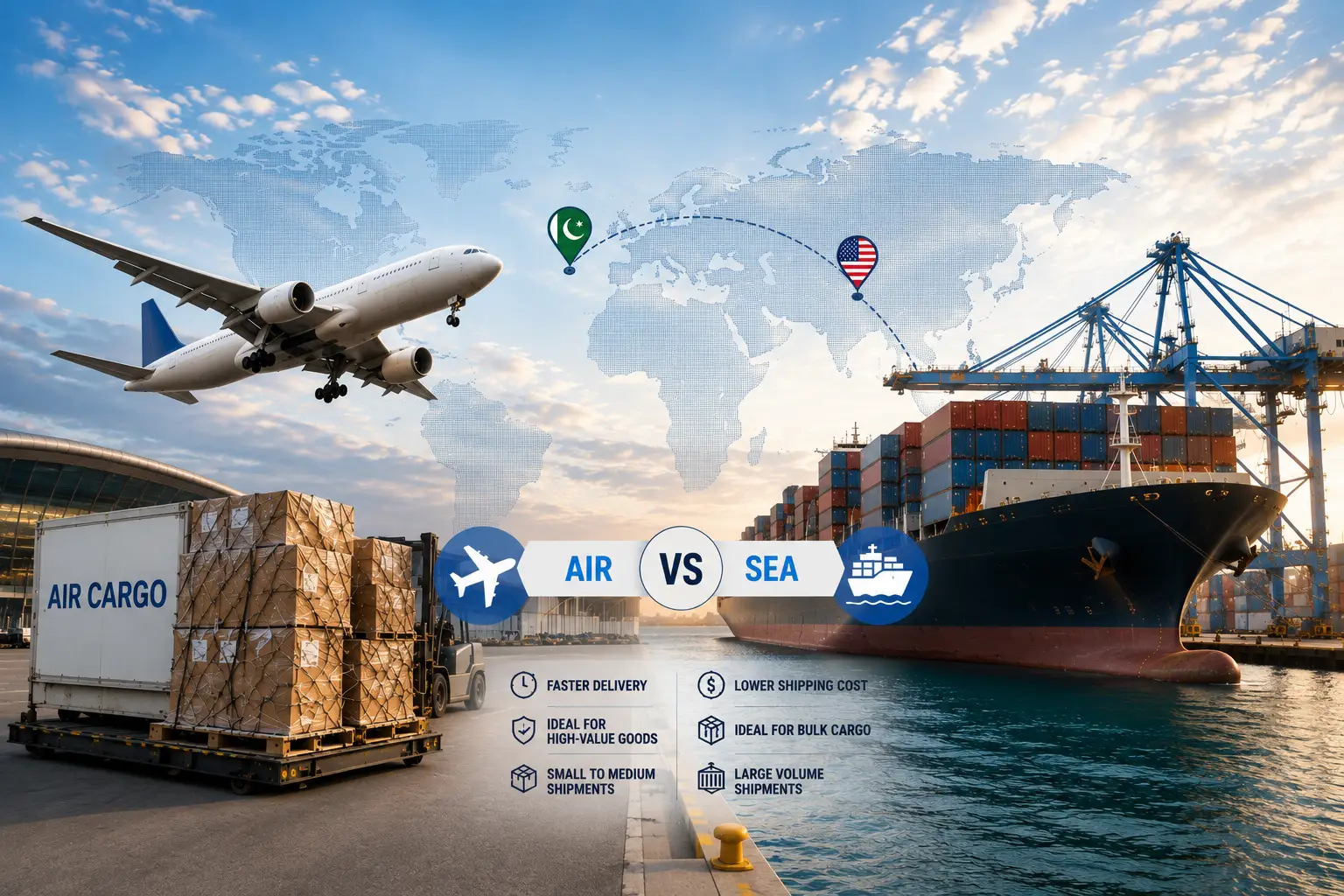
1. Compare Air Freight and Sea Freight
Don’t automatically choose the same shipping method for every order.
Air freight is usually better when:
- The shipment is urgent
- Cargo volume is relatively small
- Products have high value
- Customers need fast delivery
- Inventory shortages would be expensive
Sea freight can be more suitable when:
- Cargo volume is large
- Delivery isn’t urgent
- Products have lower value-to-weight ratios
- You want a lower transportation cost per unit
For example, a small urgent shipment from Sialkot to the USA may make more sense by air, while a large commercial shipment may be more economical by sea.
The right choice depends on your cargo, destination, delivery deadline and budget.
2. Consolidate Shipments Where Practical
Sending multiple small shipments separately can increase your overall logistics expenses.
If your production and delivery schedules allow it, consider consolidating cargo into fewer shipments.
Consolidation can potentially help reduce:
- Handling costs
- Documentation expenses
- Transportation charges
- Per-shipment fees
However, consolidation isn’t always the right answer.
If delaying one shipment means missing a customer’s deadline, the savings may not justify the delay.
Good logistics planning means balancing cost and time, rather than focusing on either one alone.
3. Improve Your Packaging
Packaging is often overlooked when businesses try to reduce freight costs.
But inefficient packaging can increase the dimensions of your shipment and therefore increase its chargeable weight.
Ask:
- Can cartons be made smaller?
- Are you using unnecessary packaging material?
- Can products be stacked more efficiently?
- Are boxes properly sized?
- Can multiple smaller cartons be consolidated?
A small reduction in package dimensions multiplied across hundreds of shipments can create meaningful savings.
4. Plan Shipments Earlier
One of the easiest ways to avoid shipping delays and potentially reduce costs is simply to stop treating freight as an afterthought.
Instead of contacting your logistics provider when the cargo is already sitting in the warehouse, plan shipping before production is finished.
Give your freight forwarder information about:
- Cargo type
- Quantity
- Weight
- Dimensions
- Pickup location
- Destination
- Required delivery date
This allows them to evaluate suitable shipping options before the shipment becomes urgent.
Urgent shipments often leave businesses with fewer choices.
5. Choose the Right Freight Forwarder
Choosing a freight forwarder in Pakistan is not simply about finding the lowest quotation.
A capable freight forwarder should help you understand the complete shipping process.
Before selecting a provider, ask:
Does the forwarder offer multiple transportation options?
A company offering both air and sea freight may be able to recommend the most suitable solution depending on your shipment.
Can they handle international destinations?
For exporters targeting the USA, UK and Europe, destination knowledge matters.
Do they help with documentation?
Incorrect or incomplete documentation can create unnecessary delays.
Can they provide shipment tracking?
Visibility helps exporters identify problems before they become serious.
Do they explain additional charges?
A low initial quote isn’t useful if unexpected fees appear later.
6. Don’t Choose a Freight Forwarder Based Only on Price
This deserves special attention.
Suppose Company A offers a freight quote of $500.
Company B offers $540.
At first glance, Company A appears cheaper.
But later you discover that Company A’s service includes additional handling costs, slower transit and limited destination support.
Company B’s quotation includes better routing, clearer documentation support and more reliable delivery.
The $40 difference may be insignificant compared with the cost of a delayed shipment.
For exporters, the cheapest freight rate isn’t necessarily the cheapest logistics solution.
Pakistan to USA Shipping: What Exporters Should Consider
The Pakistan to USA shipping market is important for many Pakistani exporters.
Businesses shipping from Sialkot and other industrial areas may send:
- Sports goods
- Leather products
- Gloves
- Textile products
- Apparel
- Surgical and industrial products
- Machinery and components
For these shipments, exporters should evaluate:
Cargo type + weight + dimensions + urgency + destination + customs requirements
Air freight can be attractive for smaller or urgent shipments, while ocean freight may be more suitable for larger commercial volumes.
The same principle applies when shipping from Pakistan to Canada, the UK and European destinations.
Pakistan to Europe Shipping: Don’t Ignore Transit Time
For Pakistan to Europe shipping, exporters should consider both freight cost and delivery schedules.
Germany, France, Italy, Spain and the UK are important destinations for Pakistani products.
A cheaper shipping option may not always be the best option if it adds several days to the delivery schedule.
For businesses operating on tight production cycles, predictable transit time can be more valuable than saving a small amount on freight.
How Technology Can Help Exporters in 2026
The logistics industry is becoming increasingly data-driven.
Modern freight operations use digital tracking, automated documentation, shipment visibility tools and data analysis to improve transportation planning.
For exporters, this means better visibility into:
- Shipment status
- Transit times
- Estimated delivery dates
- Documentation
- Route changes
- Potential delays
The trend toward digital freight forwarding and technology-driven logistics is likely to continue as international supply chains become more complex.
However, technology works best when combined with experienced logistics professionals who understand the realities of international shipping.
The Bottom Line: Don’t Just Chase Lower Freight Rates
International shipping rates can rise for reasons that exporters cannot control.
Fuel prices, route disruptions, demand, congestion, regulations and global trade conditions can all affect freight costs.
But exporters can control how they respond.
You can:
- Plan shipments earlier
- Compare air and sea freight
- Optimize packaging
- Consolidate shipments when practical
- Understand your destination requirements
- Prepare accurate documentation
- Monitor shipment progress
- Work with an experienced freight forwarder
The goal isn’t simply to find the lowest possible freight quotation.
The goal is to find the best balance between cost, reliability and delivery time.
For Pakistani exporters, that difference can have a direct impact on profit margins and customer satisfaction.
Ship Smarter With Pacewell Cargo for Best Shipping Rates
Looking for a reliable freight forwarder in Pakistan for international cargo?
Whether you’re shipping from Sialkot or another city in Pakistan, Pacewell Cargo can help you evaluate suitable air freight, sea freight and international cargo solutions based on your shipment requirements.
Instead of guessing which shipping method is cheapest, provide your cargo details and destination so the right option can be evaluated for your business.
Planning your next shipment? Contact Pacewell Cargo for a customized international freight quotation.